

Does Minimalist Branding Design Really Matter in 2026? Here's the Truth About Maximalist Trends
- Owen Measures
- Dec 16, 2025
- 5 min read
The design world has been having an identity crisis. For years, minimalism ruled supreme, clean lines, stark whites, and the sacred mantra of "less is more." But as we settle into 2026, a rebellious wave of maximalist branding is making noise, leaving business owners wondering: should I stick with minimalism or jump on the maximalist bandwagon?
Here's the truth that most design agencies won't tell you straight: minimalism absolutely still matters in 2026, but it's not the same minimalism you knew five years ago. And yes, maximalism is gaining ground, but not in the way you might think.
The Evolution of Minimalist Branding Design in 2026
Minimalism hasn't disappeared: it's evolved into something more sophisticated and emotionally intelligent. What experts are calling "neo-minimalism" or "Minimalism 3.0" represents a significant shift from the cold, sterile aesthetics that dominated the 2010s and early 2020s.
This new approach maintains the core principles of minimalist branding design while adding crucial elements that were missing from its predecessor: warmth, personality, and human connection. Instead of stark white backgrounds and razor-sharp edges, we're seeing subtle gradients with muted yet warm color palettes, softer typography that feels approachable rather than corporate, and strategic use of white space that emphasizes intentional details rather than emptiness.

The psychology behind this evolution is fascinating. Modern consumers, especially Gen Z and younger millennials, crave authenticity and transparency from brands. They can spot corporate sterility from a mile away, and they're not buying it, literally. Neo-minimalism bridges this gap by maintaining the clarity and trustworthiness of traditional minimalism while infusing it with enough personality to feel genuine.
For businesses considering modern website design, this means your branding can still benefit from minimalist principles without sacrificing emotional resonance. A user-friendly website doesn't have to feel like a medical facility waiting room.
Why Minimalism Still Dominates Digital Spaces
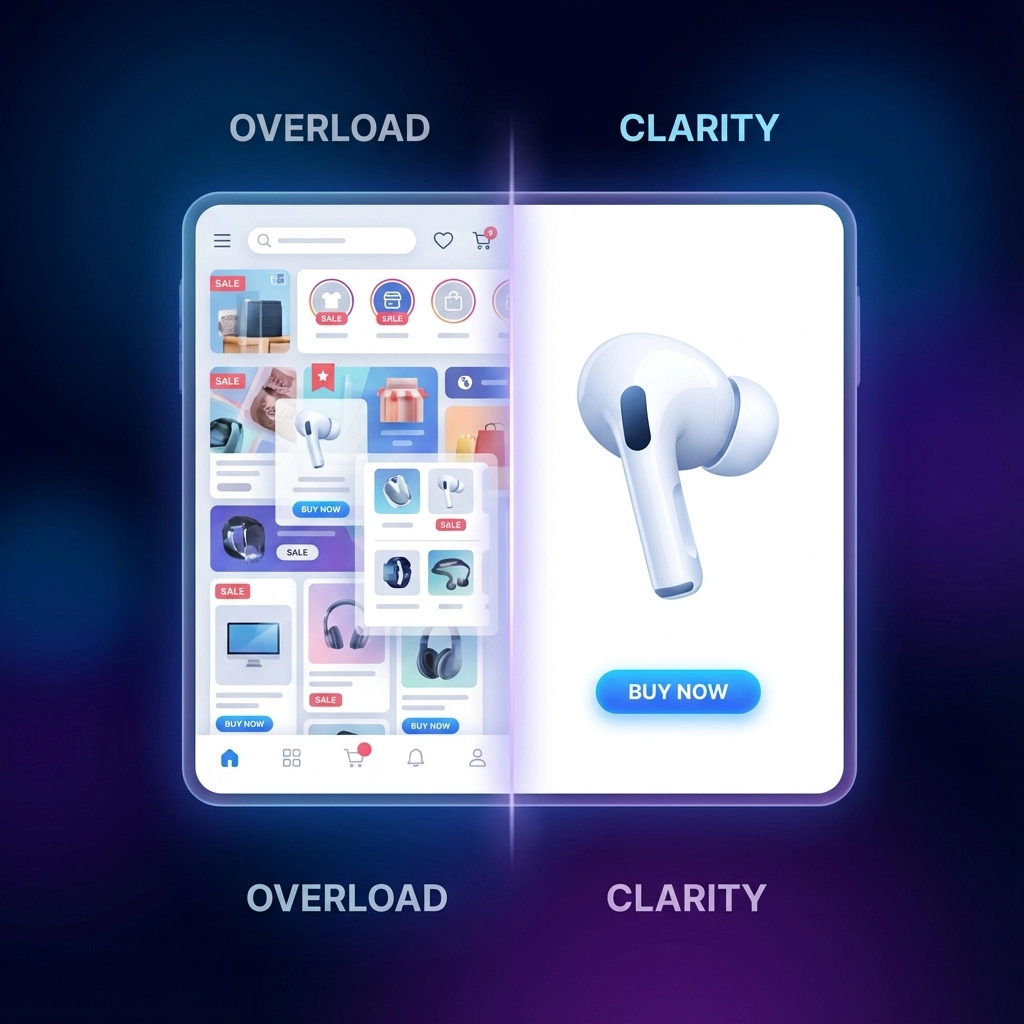
Despite the buzz around maximalist trends, minimalism continues to reign supreme in digital environments, and there are solid reasons why. When it comes to responsive website layout and eCommerce website design, minimalism offers practical advantages that maximalism simply can't match.
From a technical standpoint, minimalist designs load faster, perform better on mobile devices, and create fewer barriers to conversion. Search engines favor clean, well-structured websites, which means minimalist approaches often align better with SEO strategies. This isn't just theory: it's measurable impact on your bottom line.
Consider the user experience on a busy eCommerce site. When someone lands on your product page, they're already dealing with decision fatigue from countless options. A cluttered, maximalist design adds cognitive load at precisely the moment when you need to reduce friction. Minimalist branding design removes these obstacles, creating a clear path from interest to purchase.
Local businesses, in particular, benefit from minimalist approaches in their digital marketing services. When someone searches for "web designer near me" or similar local SEO strategies, they want quick answers and clear next steps. A minimalist website design helps deliver both.
The Maximalist Counter-Movement: More Than Just Rebellion
But let's address the elephant in the room: maximalism isn't just design students rebelling against their professors. There's a legitimate movement gaining traction, and it's worth understanding why.
Brands like Dip Teique have found success with bold, ornate designs that deliberately reject minimalist conventions. Their maximalist aesthetics: rich colors, elaborate details, layered textures: stand out precisely because they refuse to follow the minimalist consensus. In a world where every tech startup looks identical, maximalism offers a path to genuine differentiation.
This trend taps into something deeper: nostalgia and heritage branding. Luxury brands are returning to their original elaborate logos and distinctive character. Think of how Versace's maximalist aesthetic communicates opulence and craftsmanship in ways that a minimalist approach never could.

The key insight here is that maximalism works best for brands with strong identities and confident positioning. It's not a default choice: it's a strategic decision that requires courage and clear brand values.
The Practical Truth for Your Business
So what does this mean for your business in 2026? The answer isn't choosing sides in some imaginary design war. The most sophisticated brands aren't picking between minimalism and maximalism: they're strategically combining elements from both.
The winning formula looks like this: minimalist structure with carefully chosen maximalist moments. Use minimalist principles to create clarity and usability, then add strategic maximalist elements to inject personality and memorability.
For modern website design, this might mean clean navigation and generous white space (minimalist) combined with bold hero imagery and rich brand colors (maximalist). For branding design, it could involve simple logo marks with elaborate brand photography or sophisticated color gradients.

This hybrid approach works because it acknowledges that different parts of your brand serve different functions. Your website navigation needs to be crystal clear (minimalist), but your brand story can be rich and detailed (maximalist).
Industry-Specific Considerations
The minimalism vs maximalism question becomes more nuanced when you consider specific industries. Professional services, healthcare, and financial companies often benefit from minimalist approaches because they need to communicate trust and reliability. Their users come seeking information and solutions, not entertainment or inspiration.
Creative industries, luxury brands, and lifestyle companies have more flexibility to embrace maximalist elements. Their audiences expect personality and are more tolerant of complex visual experiences.
eCommerce sits somewhere in the middle. Product photography can be bold and maximalist, but checkout processes should remain minimalist for optimal conversion rates.
SEO and Performance Implications
From an SEO perspective, the choice between minimalist and maximalist design has real consequences. Search engines favor fast-loading, well-structured websites with clear hierarchies: advantages that typically favor minimalist approaches.
However, maximalist designs aren't inherently bad for SEO if implemented thoughtfully. Rich visual content can increase engagement metrics, which positively impact search rankings. The key is ensuring that visual complexity doesn't come at the expense of technical performance.
Local SEO strategies, in particular, benefit from clear, minimalist structures that help search engines understand your business information and services quickly.
The Future of Branding Design
Looking ahead, the minimalism vs maximalism debate misses the bigger picture. The future belongs to adaptive branding systems that can flex between minimalist and maximalist expressions depending on context.
Your logo might be minimalist for app icons and business cards but expand into richer, more detailed versions for large-format applications. Your website might use minimalist layouts for conversion-focused pages while embracing maximalist storytelling on brand experience pages.
This flexibility isn't just trendy: it's practical. Modern brands need to work across dozens of touchpoints, from tiny social media profile pictures to massive billboard advertisements. A rigid adherence to either minimalism or maximalism limits your options.
Making the Right Choice for Your Brand
The truth about minimalist branding design in 2026 is that it absolutely still matters, but it's no longer about choosing between extremes. The brands succeeding today understand that minimalism provides the foundation for clear communication and user-friendly experiences, while strategic maximalist elements add the personality and differentiation needed to stand out.
Whether you're planning a website redesign, developing new branding materials, or crafting digital marketing services, the key is understanding your audience and context. Use minimalist principles where clarity matters most, and don't be afraid to embrace richer, more complex expressions where personality and differentiation are crucial.
The future isn't minimalist or maximalist; it's intelligently adaptive. And that's a trend worth following.
Comments